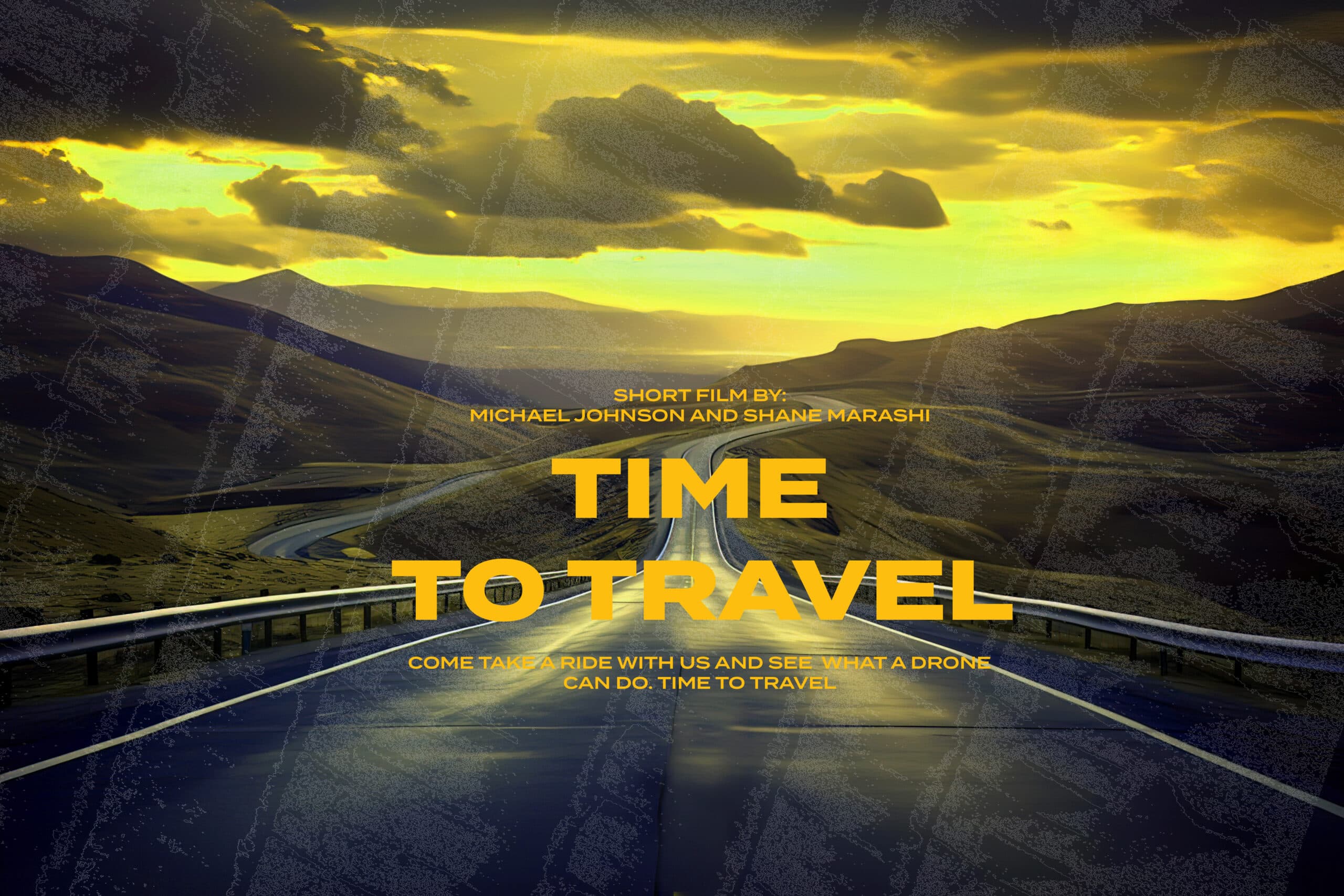
TIME TO TRAVEL
Short film demonstrating narrative capability through aerial cinematography
Demonstrate that drone cinematography alone could carry a complete narrative arc — proving that elevation and movement, without dialogue or characters, can tell a story with genuine emotional impact.
We wrote and directed a short film using exclusively drone footage, developing a visual grammar that used altitude, speed, and framing to guide the audience through a journey with emotional coherence and structural intention.
A proof-of-concept piece that established IDONTNEEDMUCH's technical and narrative command of aerial production, directly opening conversations with clients seeking large-scale visual storytelling.
Time to Travel began as a creative thesis: can drone footage, without characters or dialogue, tell a story that actually moves people?
The easy answer is no. Aerial footage is typically understood as context — a way to establish scale or geography, not a primary narrative vehicle. We wanted to challenge that assumption.
We developed a shot sequence that treated aerial cinematography not as b-roll, but as a complete visual language. Each movement was scripted. Each altitude change served a narrative function. The edit was structured like a three-act film, with the drone's perspective substituting for a human point of view.
The project demonstrated that constraint is not a limitation — it's a discipline. When you remove everything but the image, the image has to do everything.
Time to Travel remains one of our most shared pieces and has directly led to client conversations about elevated, cinematic production at scale.